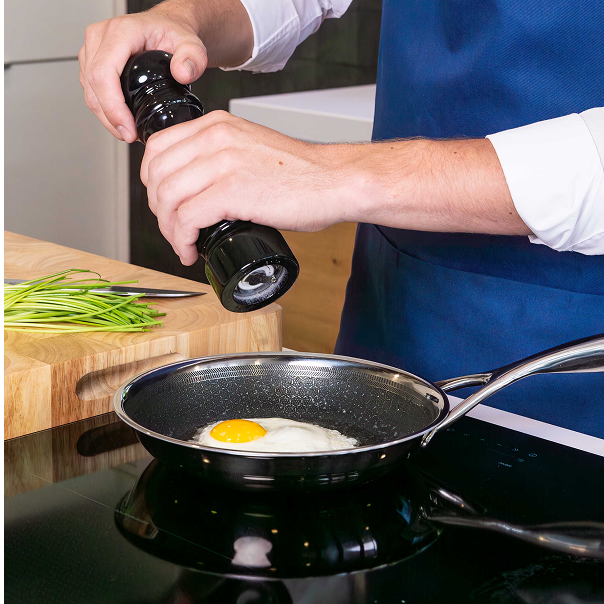
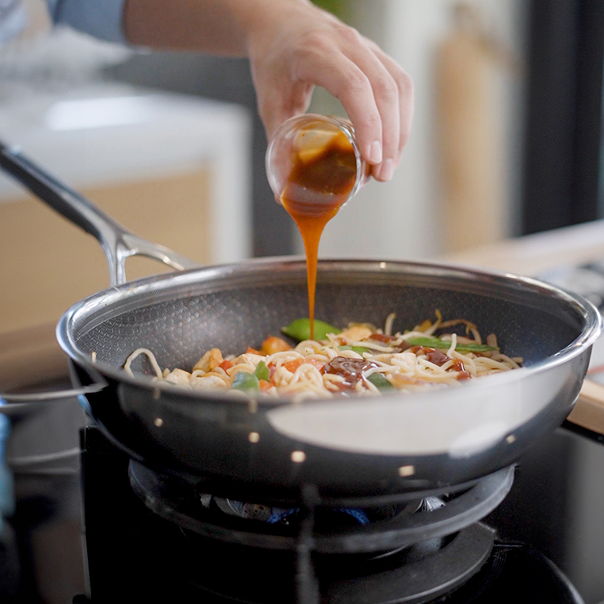
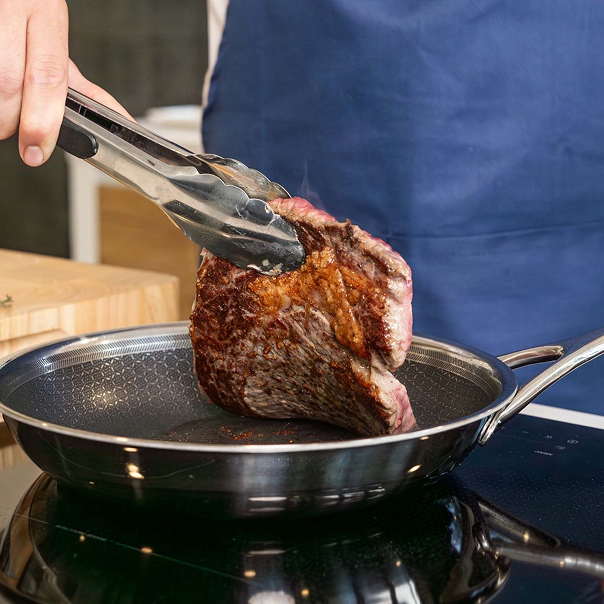
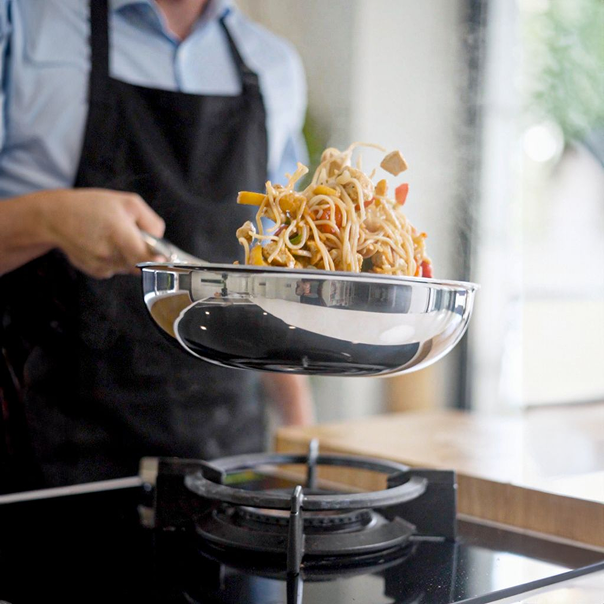
Induction works through magnetic fields. No magnetic, flat base? No heat. That's step 1. Step 2 is less visible: heat distribution. An induction cooktop can push power incredibly fast. Bases that are too thin or poorly constructed produce “striping” and hotspots: your steak fries unevenly, your omelet sticks, and vegetables burn while the middle stays pale. No thanks.
What you do want:
- Magnetic, perfectly flat base (induction-compatible, stable contact).
- Triple (tri-ply) construction: aluminum core for speed + stainless steel for stability and durability.
- Hybrid cooking surface: contact heat (sear) but easy release and cleaning.
- A genuine PFAS-free claim: no PTFE/PFOA, period.
Then there's the PFAS-in-pans part
There's a lot of online discussion about PFAS. But the only thing you need to know, and that's also proven, is the following:
- PFAS/PTFE coatings can cause problems at high temperatures.
- “Ceramic” isn't automatically a safe miracle solution; they often wear out quickly and lose their non-stick function.
- Hybrid (Matero) takes a different approach: without PFAS, with stainless steel + structure for contact heat and easy release. High temperature? Bring it on.
Conclusion: if you want induction performance + a healthy choice, go PFAS-free and hybrid.